
Blog
Social Media Trends 2025: Why Platforms Are Copying China
This isn't going to be your typical Social Media Trends 2025 roundup. Why not? Because when we think of trends, we picture grassroots phenomena — something a few users pick up first, and then it ripples outward into ever wider circles. Social networks are training us more and more to dance to their tune, so it isn't really users driving change from the bottom up anymore; it's the platforms imposing a good chunk of our behavior from the top down. And on top of that, they copy each other relentlessly.
So let's start with the megatrends, then work our way down.
The US Is Copying China
In-Stream Commerce
DouYin — the Chinese version of TikTok — earns most of its revenue from in-app purchases. Jing Daily reports that the platform posted 46% year-over-year revenue growth and set itself a target of $548 billion by the end of 2024 (up from $374 billion at the end of 2023). China's market employs 27,000 agencies supporting roughly 9 million certified creators.
By comparison, at the end of 2023 Western TikTok's revenue came in at… $3.8 billion. Peanuts next to the Chinese giant, right? That's why TikTok is working hard to bring live commerce to Western markets. According to data.ai Americans currently spend the most, followed by Germans and Brits. In 2025 we'll see a growing push into live commerce, because there's serious money in it. https://seller.tiktok.com for sellers will roll out to more countries.
For that to happen, you need creators. Not traditional influencers who built reach just for the sake of having reach, but hustlers willing to put in the time to monetize through each platform's own mechanics. Both TikTok and Meta know this well, which is why they'll keep pouring resources into building infrastructure — Meta has long run a partner program for agencies, and TikTok is getting more sophisticated in this space too. Agencies will keep supporting an ever-wider pool of content creators. Expect a wave of agencies like foap that connect creators with brands across platforms.
Mini-Programs and the Everything App
When Elon Musk was buying Twitter, he had two visions for it in mind. The first was a “digital town square” — a place to trade information and gossip. The second was an “everything app”: one single app where you could get everything done. Musk said he wanted to turn Twitter into something like the WeChat ecosystem.
WeChat is China's do-everything app. It started life — as the name suggests — as a chat app, but it quickly grew an ecosystem of so-called mini-programs: cloud-launched mini-apps with their own interfaces, built to serve specific needs. These can be shops (Nike and Fendi each have their own mini-program), games (Coca-Cola and Vans have their own games inside WeChat), or cultural events (museum mini-programs let you buy tickets and listen to audio guides).
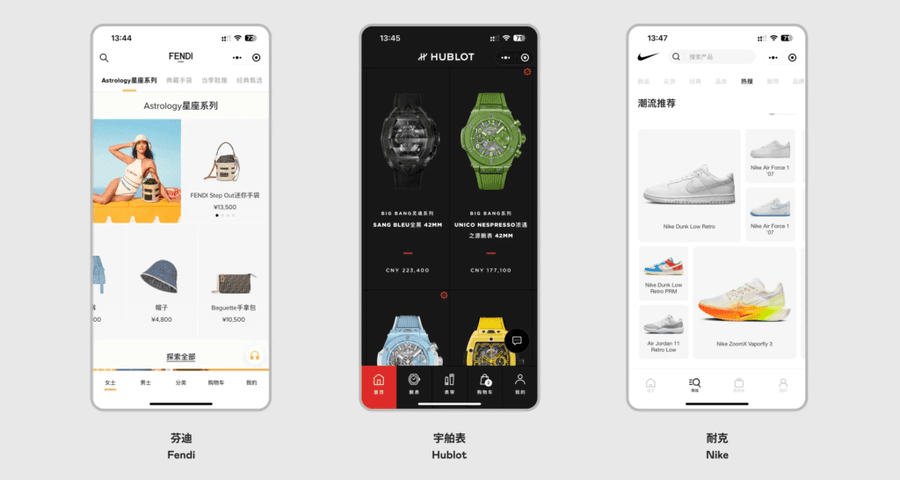
Mini-programs are launched with a button inside the main app, or triggered via the QR codes so popular in China. The key difference between a mini-program and the apps we know in the West? You don't have to install a mini-program. It appears when you need it and disappears when you don't.
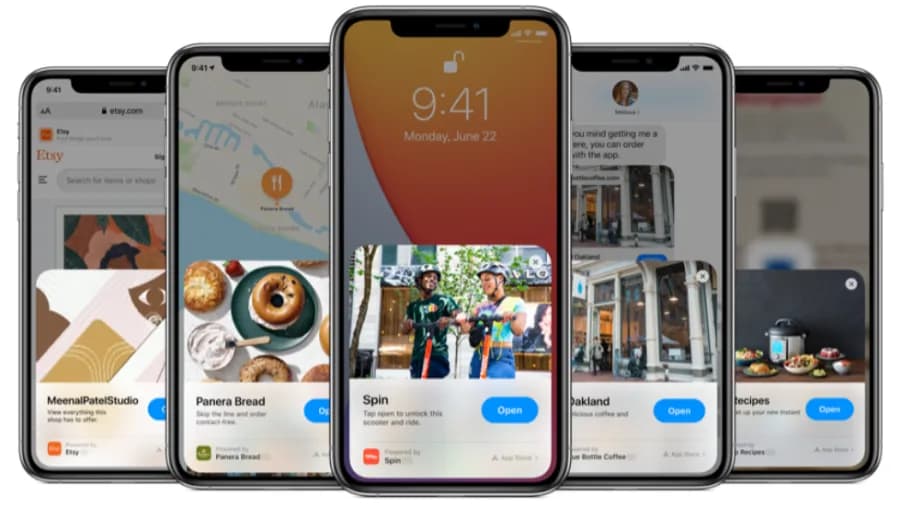
The first mini-programs appeared in WeChat around 2017. In the West, Apple tried to copy the concept and called it App Clips, but… it never really caught on. Meta gave it a shot too, adding features to Messenger. That didn't stick either. Since then, other Chinese platforms have built out mini-programs of their own too, including AliPay (China's payments platform) and… DouYin (Chinese TikTok).
For now, Elon Musk has shelved the everything app concept — 2025 has him busy supporting the Trump administration, so other platforms may well pick up the baton. Apple successfully rolled out Apple Cash, and TikTok is rolling out shops. In 2025 we'll watch social networks keep expanding their ecosystems. If people don't want to post on Facebook anymore, fine — let them buy movie and museum tickets there instead. Though they might take a slightly different approach.
Especially since in 2024 Facebook saw its active-user growth stall out — both daily (DAU) and monthly (MAU). Statista reports (citing Meta's own figures) that in 2024 Facebook had 2.1 billion daily active users and just over 3 billion monthly active users — exactly the same as in 2023. That's still more than any other social network, but Meta is worried and looking for a way to reverse the trend.
More AI
AI Avatars That Get Things Done
I mentioned earlier that the in-stream commerce push can't happen without creators (and without content, obviously). Back in 2023, DouYin already offered brands virtual influencers that ran 24-hour sales livestreams. Generating one such deepfake cost $1,000 at the time.
In the West, demand for livestreams is a bit lower, so avatars aren't quite as urgently needed or profitable, but both Meta and TikTok want to hand creators AI tools to help them along. TikTok announced Symphony, which bundles tools for creating AI avatars, generating ad scripts, dubbing into other languages, and a language model trained on TikTok data that you can ask to analyze any topic.
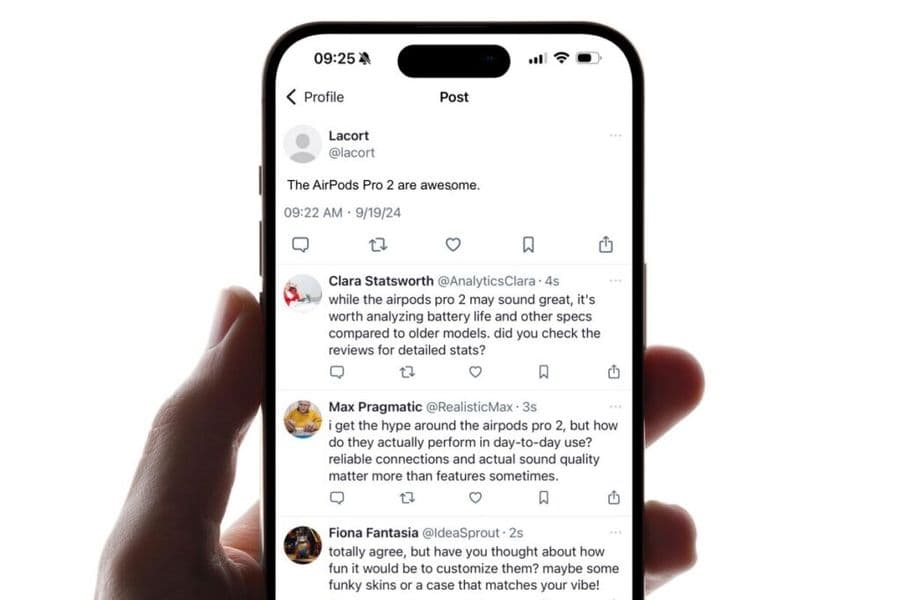
Meta, meanwhile, showed off bots meant to make it easier for brands to reach customers back at Connect 2023. Connect 2024 was all about avatars. Add to that the fact that Meta employs Michael Sayman, the creator of SocialAI — a social network populated entirely by bots that become your followers. They comment on your posts, like your photos, chat with you, and let you feel like a celebrity. SocialAI is part game, part toy, but… I also see it as a kind of social diagnosis of a younger generation (Sayman was born in 1996), and as something of a proof of concept that could eventually find its way onto Facebook.
AI in Content
In July, Meta unveiled AI Studio — a platform where you can build a completely artificial persona, or clone yourself. Meta's avatars can be loaded with knowledge and “put to work” chatting on Instagram or WhatsApp. Creators can use them to generate content. Expect to see a lot more of this in 2025.
AI in Paid Campaigns
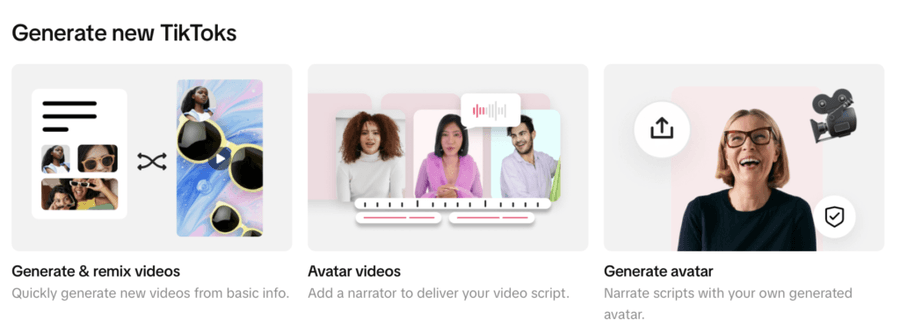
TikTok's Symphony package also includes AI support for generating and distributing ads. Meta has Advantage+, and claims that ads run entirely by algorithms deliver, on average, better results than ones managed by people. Tino Krause, Meta's regional director for Central Europe, told me as much during our conversation at the Meta Marketing Summit.
AI in… Recruiting
LinkedIn offers an unusual application of AI for a social network. Its AI model is designed to help recruiters find potential candidates for a role and then help screen through applications.
More Video
One of the ways Meta is “patching” Facebook's lack of growth is by leaning harder into video content. Even though Facebook's user numbers have held flat, the engagement mix has shifted — video consumption on Facebook has grown by around 20% at the expense of other content types. A dedicated video tab (vertical, of course) has shown up inside the Facebook app. That's had a negative knock-on effect on Meta's ad revenue, since many ad formats native to Facebook can't be shown between Reels. TikTok keeps chipping away at market share from Facebook, Instagram, and YouTube alike.
The consequences? More ads will have to be made as video. Vertical video, of course. So: social media trends for 2025 mean more vertical video.
In June 2024, LinkedIn launched a partner program called The Wire, which lets selected brands place video ads inside video streams from outside publishers. In its press release, the platform pointed to rising video consumption on LinkedIn too.
LinkedIn Leans Into Live and Events
Speaking of LinkedIn. New ad formats in the Thought Leader program let selected brands sponsor content from any user. Before March 2024, the program only allowed sponsoring content from verified employees of your own organization (which is why LinkedIn lets you verify with a company email address) — now brands can “boost” posts from any influencer.
In October, LinkedIn said it would be investing in live video. That's because livestreams are growing on the platform — LinkedIn says by roughly 15% year over year. Advertisers will be able to sponsor selected streams, and the platform will share revenue with creators. So if you're thinking about an influencer career but the crowds on Instagram or TikTok scare you off, maybe LinkedIn is a good option?
Event organizers can create a 30-second teaser for potential attendees, and target events to specific regions.
Federation, Censorship, and Alternative Platforms
Twitter/X has… one moderator for Poland. That's according to the transparency report the platform is required to file in the European Union. That same report shows X is losing users across the EU — nearly 5 million disappeared between February and August, with another 300,000 gone by October 2024.
Users are moving to Bluesky, Mastodon and Threads. I've written about what these platforms are in dedicated articles — Mastodon here and Bluesky here. They all solve the same problem: it's incredibly hard to maintain a single set of rules that users from all corners of the world will accept as “theirs.” It doesn't help that those rules are set by American corporations (or Chinese ones, if we're talking about TikTok). The solution is to split platforms across different servers with different rules — servers that can still talk to each other. That process is called federation. I write more about federation in the articles on Mastodon and Bluesky.
Bluesky started life as a federation project inside Twitter, because people at Twitter recognized this problem. Meta and its Threads are opening up to federation too — for now just as a beta in some countries, but it's a step in the right direction. TikTok is a closed protocol, though ByteDance (TikTok's parent company) has taken care to split it into a Chinese arm (DouYin) and a Western one (TikTok). That may not be enough, though — in April 2024 the US Senate gave ByteDance an ultimatum: sell TikTok to an American company, or TikTok gets banned in the US. Will the new administration change that order? If not, we're looking at a migration from TikTok to alternative platforms, the way it happened in India, for example (TikTok has been banned there since 2020).
TikTok's case points to another problem we'll need to solve in 2025. Because content generated on social platforms can stir up strong emotions, and those emotions can push lawmakers toward banning a platform outright, social networks are playing it safe. Meta's and TikTok's algorithms throttle reach whenever controversial topics come up — drugs, death, suicide. Censorship is automatic, and the appeals process is a headache (remember, X has exactly one moderator, who speaks Polish). Users have caught on, and… they self-censor. If you've ever starred out the word s*x in a story, or seen someone say unalive instead of die on TikTok — you know exactly what I mean.
Your Own Community, Your Own Rules, Your Own Server
Federation is one solution to this problem. The other is building your own place on the web, where users don't have to follow lowest-common-denominator rules. If you run a support group for families of suicide victims, neither Meta nor TikTok — with their automated moderation — is the right place for you.
Solutions that let you build communities on your own rules and… your own servers are popping up like mushrooms after rain. I use Circle myself; you've also got options like BuddyBoss or a newer player, Fluent Community. The future of social media lies… outside social media. And no, that doesn't mean giving it up entirely — like with everything, it's about a healthy balance. Because it'll go to your head before you even notice.
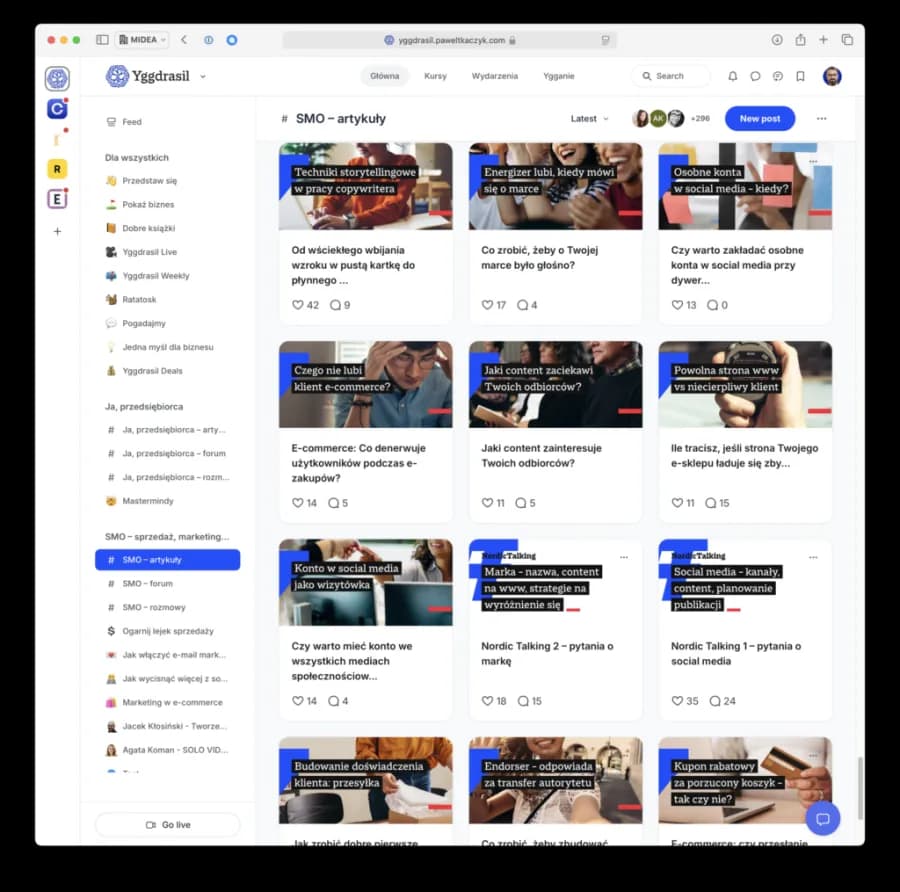
Here's an anecdote to prove the point. I run a community called Yggdrasil, home to more than 400 entrepreneurs who trade advice, opinions, and knowledge. The community runs on Circle, the same tool I recommended in the previous paragraph. One of the groups inside Yggdrasil is called ‘Show Your Business’ — the name says it all. One of the ‘Ygg-members’ (that's what community members call themselves) works in sex education — a great and much-needed field. Know what scared me? When she introduced herself, she wrote on Ygg that she works in ‘s*x education.’ She self-censored on a topic where no one should have to, in a place where she didn't even need to. That's how deeply social networks shape our habits.
Want More on Social Media?
On December 4th, Jakub Biel and I are running a webinar on how to get more out of social media in 2025. Sign up.
Sign up for the webinar

Newsletter
Want more essays like this one?
One useful idea at a time — on brands, choices, stories and AI. Written when there is something worth developing, not to fill a schedule.